Showing posts with label gravity. Show all posts

Saturday, September 15, 2007

Large Hadron Collider: Apocalypse Soon?

Probably Not

While looking over my site visit statistics, I found that many of my visits are to my article a few months back about the Large Hadron Collider under construction in France and Switzerland. A quick glance through the search terms that have led people to the article yield the following:

  • LHC Black Hole
  • Large Hadron Collider Doomsday
  • Large Hadron Collider Apocalypse
  • Large Hadron Collider Destroy Universe
  • Harge Hadron Collider End of the World
  • CERN destroy world
These searches are coming from the UK, France, Texas, Massachusetts, Singapore...you get the point. It seems like a lot of people are worried about CERN's LHC destroying the world.

Since this seems to being weighing heavily on the consciences of many people, I thought I would address it with a little more detail.

The nature of black holes has been debated for quite some time. What most people know about black holes is that they are incredibly dense masses in the universe. Since the force of gravity is dependent on mass, a black hole has an incredibly strong force that is powerful enough to capture even electromagnetic waves like visible light. For me, this has always been a little bit preplexing becase I used to wonder why Black holes ever stopped engulfing everything around them. To my mind, if something was massive enough to capture anything of mass around it, then it would continue to add mass. If it continued to add mass, it would then have an even greater gravitational force. Why would it ever stop?

It seems that black holes do lose their mass. They emit radiation which is actually representative of the mass and energy consumed by the black hole. Eventually, they radiate into nothingness; particularly small black holes created by collisions of tiny subatomic particles.

Now, I cannot claim that these are unequivocal facts. Much of this has been debated since the early 1970's. Stephen Hawking himselfrecently retracted his postulation that the radiation out of black holes carries no information from the mass and energy captured by it. He now believes that the radiation does carry information about what the black holes is made out of. He hsays the only problem with the information is that it is so random and jumbled that piecing it together into something we can interpret is virtually impossible.

However, the idea of black holes quickly radiating their energy such that they lose their mass makes a lot of sense to me. Otherwise I can envision black holes ever growing and consuming the whole universe...there is no evidence of this in astronomy.

So in the case of the tiny little subatomic particle derived black holes generated by CERN at the Large Hadron Collider, it seems very unlikely that a sustained black hole can possibly be produced. It will lose its mass to radiation faster than it can collect mass do to its gravitational pull.


Sunday, June 17, 2007

EARTH II: How to Find Earth-like Planets


There has been a lot of press lately about the discoveries of many “Earth-like” planets outside of our solar system orbiting other stars, otherwise known as terrestrial exo-planets. When I read press releases about these things, I picture exotic worlds filled with oddly colored vegetation, some animal like creatures, and maybe skinny humanoid biped extraterrestrials

with some intelligence and language. I also wonder how long before humans can colonize.

Then I remember that I am probably getting way ahead of myself and I start asking annoying questions like:

  • What is the definition of an “Earth-like” exo-planet?
  • What technologies are scientists using to discover exo-planets?
  • What technologies are scientists using to discover the nature of these planets?

What do scientists mean when they call a planet “Earth-like”?

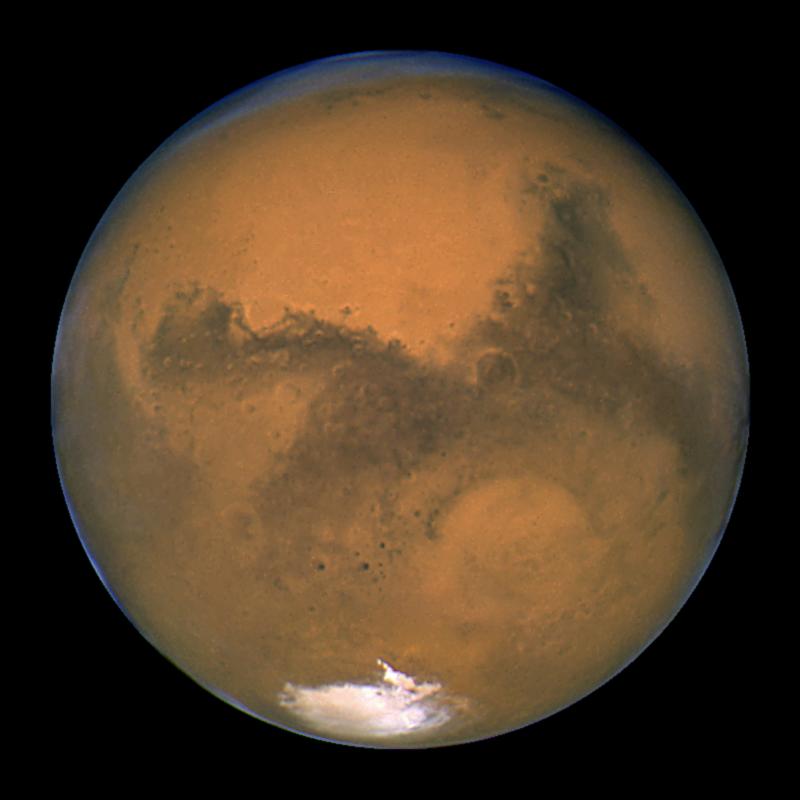
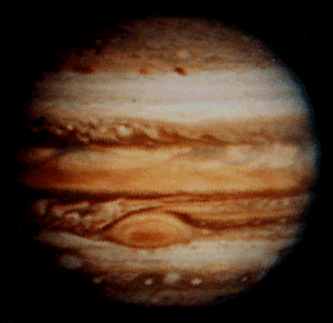
Historically, an Earth-like, or terrestrial, planet has been characterized as a rocky planet like Earth or Mars, as opposed to a gas giant like Jupiter. However, recent news articles seem to be adding an additional element to the vernacular connotation of “Earth-like”; they seem to be talking about rocky planets that are the same distance from their star as we are from our sun. The basic implication here is that scientists are trying to find environs that might be adequate or ideal to support life; like the our home planet Earth.

The most interesting thing to note about the definition of “Earth-like”planet is that it is a very broad definition. A planet exactly like Mars in another solar system would easily fall under the definition. As we all know, Mars is hardly lush with tropical rainforests.


What technologies are scientists using to discover exo-planets?

Right now, scientists can’t see these planets directly through conventional light telescopes, not even with the amazing Hubble Space Telescope without first knowing exactly where to look. This is because the planets are not bright or big enough relative to their cosmic surroundings to stand out. In the same way that ambient city lights make it difficult for us to distinguish stars in the night sky, bright stars make it very difficult for us to distinguish nearby planets in the night sky even with high powered telescopes. Because of this, scientists need to be creative when discovering distant non-star celestial bodies.

Most exo-planet discovery has been accomplished with a technique called gravitational microlensing. Gravitational microlensing harnesses one of clever Albert Einstein’s equations predicting the nature of light and gravity. Einstein predicted that light observed from a distant source, like a bright star, would bend whenever a massive object passes near the light beams between the source and observer. Not surprisingly, Einstein was right and scientists can use these light bends to determine when planets are passing between stars and us. Depending on how big the star is, scientists can use the degree of light bending to determine how big an orbiting planet is.

What technologies are scientists using to discover the nature of exo-planets?

Basically, gravitational microlensing can indicate the presence of a planet and a little bit about its mass. Once we know where a planet is, we can point high powered telescopes at it in order to catch a glimmer of its reflected light. Once we can observe the reflected light, we can learn more about a planet’s orbit using another indirect observation technique called radial velocity analysis.

To explain radial velocity analysis, we will talk a little bit about the nature of light. Light travels in waves with specific wavelengths for each color of light. Longer wavelengths look redder and shorter wavelengths look bluer. Another one of Einstein’s clever insights was that if a light source, in this case a planet, was moving toward you, its light wavelength would shorten and look then look bluer. When it is moving away, it will look redder. Because of this we can determine the distance and duration of a planet’s orbit. This is how, besides knowing a planet’s size, scientists can determine how far it is from parent star.


When will we know more?

In general, all we can really know about the exo-planets right now are the following characteristics:

  1. That the planet is there.
  2. How big it is
  3. How close it is to its sun
  4. How fast it moves

Because of those facts, we can guess what the planet is made of and how hot or cold it is.

We will know much more within the next decade when NASA launches its Terrestrial Planet Finder project into space and when ESA launches its DARWIN project. These two projects will take the technologies which we described above and lunch them into outer space to get a closer, less noisy, view of what is out there. Eventually we will be able to use color spectrometry to determine which elements and molecules constitute the planets’ masses. We will see if there is oxygen, methane, water, etc…all clues that would indicate possibilities of life elsewhere in the galaxy.

We have a ways to go, but maybe someday will finding ourselves looking at someone who is looking back at us. Well, because of the speed of light it would mean they were looking at us about 30 years ago and we are just seeing them now.