Pennsylvanian Inventor Touting Cancer "Cure"
Cancer is a challenge. It is a challenge to patients. It is a challenge to their families. It is a challenge to researchers.
A leukemia patient from Erie, Pennsylvania decided to take matters into his own hands. His name is John Kanzius and he doesn't have an MD, Phd, or even a bachelors degree. He is, however, a creative mind who has been a radio and TV engineer for most of his life. Kanzius put his experience with radio wave technology to use when he coupled it with cutting edge nanotechnology. He and his partners have created injectable nanoparticles which generate heat when they are exposed to low frequency radio waves. This is definately and interesting and inspirational story.
Kanzius's energy transfer technology sounds fascinating, it really does. The idea of being able to heat small particles with projected radio waves could have lots of uses. Unfortunately, I just don't think its a cure or even a particularly useful technology for the treatment for cancer. Sorry, Mr. Kanzius.
Basically, Kanzius wants to physically perturb the cancerous cells by cooking them. He says that cancer cells will die when exposed to temperatures over 130 degrees. Well, so will healthy cells. While that is an interesting idea, it really isn't very much different from killing the cancerous cells chemically with chemotherapeutics or with targeted radiation. One would still need to contend with the issue of cell/tissue specificity.
The biggest challenge, which Kanzius addresses/glosses over in interviews, will be the targeting of cancer cells only. How will he keep his nanoparticles from cooking the rest of patients' cells? How is this any different from chemotherapy which targets cancer cells in a rudimentary way by targeting dividing cells? Honestly, one could make a case to say that chemotherapies are ahead of Kanzius' radio nanoparticles because at least there is some specificity. I suppose the advantage of his technology is the fact that "treatment" can be turned off when the radio wave generator is turned off.
For his technology to work, aptamers will need to be developed. Aptamers are oligonucleotides or peptides which stick to cell specific molecules. In research, they are often bound to pharmacological agents or cell markers.
The aptamers, whether for Kanzius' superheated nanoparticle antennas or cytotoxic chemicals, would likely need to be different for each tumor type. The means that the problem remains a discovery biology dilemma. Discovery biologists and the pharmaceutical companies for whom Kanzius seems to express considerable disdain have been working on this same problem for years. They've just been trying to selectively target their chemotherapy drugs instead of superheatable nanoparticles. Discovery efforts to generate cell specific aptamers are almost as involved and expensive as any drug discovery effort. Also, the idea of verifying that an aptamer only binds to a tumor cell is a huge undertaking. Researchers would basically need to undertake an enormous protein specificity assay. Today, proteomics efforts are still cumbersome and expensive. If researchers try to take short cuts and bypass any of these experiments, we might have doctors saying, "Oops, I fried your kidney...Sorry, didn't think it was going to do that...". More concerns involve heavy metal poisoning, nanoparticle immunoreactivity, and the pharmacodynamics of the aptamer, just to name a few.
So while Kanzius should be commended for his ingenuity in introducing a new technology to the cancer fight, Joyce Savocchio (the former mayor of Erie) probably should not be declaring him a future Nobel Laureate or calling Erie the place where cancer was cured. Perhaps he should also temper his own rhetoric a little bit, particularly when he implies that no one else is working very hard on the cancer problem. He and Ms. Savocchio sound ignorant to the real issues.
Showing posts with label Medicine. Show all posts
Showing posts with label Medicine. Show all posts
Tuesday, August 28, 2007


Monday, July 16, 2007
Cows of the World Rejoice!
A Step Toward Treating Prion Pathologies?
In 1997 Dr. Stanley Prusiner of the University of California at San Fransisco was awarded the Nobel Prize in Medicine or Physiology for his discovery of prions approximately 15 years earlier. Prusiner had characterized the first infectious agents that were not somehow regulated by DNAs or RNAs.
Prions are proteinaceous infectious particles which cause diseases in myriad animals by affecting the structure and, subsequently, the function of the brain and other neural tissues. All are fatal. Prions are actually made of a protein which exists normally in healthy humans and animals called PrPc. The infectious, or PrPsc, form is different in that it is folded differently such that it cannot be broken down by proteases; the body's normal protein degrading enzymes. Not only is this aberrant form of PrP undegradable, it can actually transform the normal healthy PrP into the pathological form. It is worthwhile to note that while prion diseases can be infectious, some can be familial and directly inherited.
I like to think of the PrPsc protein as if it were an unruly elementary school student with very rich parents who have funded the new wing to the school. The bad student (PrPsc) should be expelled, but the administrators can't do it because they will lose necessary funding (proteases are unable to degrade PrPsc). As a result, the bad student is a terrible influence and converts formerly good students (PrPc) to his bad behavior. They all eventually burn down the school (Central Nervous System disease eventually resulting in death).
OK, so the analogy is crude, but you get the point, right?
A recent publication in PNAS, describes a simple but only recently possible approach to slowing this protein's infectious misbehavior. The researchers first analyzed the thermodynamic stability of PrPc. They found that the normal protein is most unstable at residues which cause a cavity in the protein. These sites of instability seem to be correlated with mutated regions of the PrP protein in inherited prion diseases.
The researchers then embarked on a "dynamics-based" drug discovery strategy. My impression of the strategy is that they utilized proteomic informatics technology to find chemical structures whi ch might bind to and stabilize the collapsible, unstable, residues of the healthy PrPc. If that isn't what they did, I think that might be a good idea...
The researchers eventually tested a handful of compounds in cell models and in animal models of prion diseases. They settled on one compound which did seem to stabilize the endogenous PrPc and reduced the rate of PrPsc induced degeneration in infected mice.
I have much interest in neurodegenerative protein conformation diseases because I work in amyotrophic lateral sclerosis (ALS) drug discovery. I have developed a bias where I am under the impression that the main key to unlocking neurodegenerative diseases lies in understanding the truth about protein misfolding, degradation, and aggregation and as such I find this publication to be very interesting. I may carry this bias as a result of having been heavily influenced by Dr. Susan Lindquist when my research group met with her about 4 years ago.
Dr. Lindquist is a leading protein misfolding expert and sums my feelings up best in the quote below:
In 1997 Dr. Stanley Prusiner of the University of California at San Fransisco was awarded the Nobel Prize in Medicine or Physiology for his discovery of prions approximately 15 years earlier. Prusiner had characterized the first infectious agents that were not somehow regulated by DNAs or RNAs.
Prions are proteinaceous infectious particles which cause diseases in myriad animals by affecting the structure and, subsequently, the function of the brain and other neural tissues. All are fatal. Prions are actually made of a protein which exists normally in healthy humans and animals called PrPc. The infectious, or PrPsc, form is different in that it is folded differently such that it cannot be broken down by proteases; the body's normal protein degrading enzymes. Not only is this aberrant form of PrP undegradable, it can actually transform the normal healthy PrP into the pathological form. It is worthwhile to note that while prion diseases can be infectious, some can be familial and directly inherited.
I like to think of the PrPsc protein as if it were an unruly elementary school student with very rich parents who have funded the new wing to the school. The bad student (PrPsc) should be expelled, but the administrators can't do it because they will lose necessary funding (proteases are unable to degrade PrPsc). As a result, the bad student is a terrible influence and converts formerly good students (PrPc) to his bad behavior. They all eventually burn down the school (Central Nervous System disease eventually resulting in death).
OK, so the analogy is crude, but you get the point, right?
A recent publication in PNAS, describes a simple but only recently possible approach to slowing this protein's infectious misbehavior. The researchers first analyzed the thermodynamic stability of PrPc. They found that the normal protein is most unstable at residues which cause a cavity in the protein. These sites of instability seem to be correlated with mutated regions of the PrP protein in inherited prion diseases.
The researchers then embarked on a "dynamics-based" drug discovery strategy. My impression of the strategy is that they utilized proteomic informatics technology to find chemical structures whi
 ch might bind to and stabilize the collapsible, unstable, residues of the healthy PrPc. If that isn't what they did, I think that might be a good idea...
The researchers eventually tested a handful of compounds in cell models and in animal models of prion diseases. They settled on one compound which did seem to stabilize the endogenous PrPc and reduced the rate of PrPsc induced degeneration in infected mice.
I have much interest in neurodegenerative protein conformation diseases because I work in amyotrophic lateral sclerosis (ALS) drug discovery. I have developed a bias where I am under the impression that the main key to unlocking neurodegenerative diseases lies in understanding the truth about protein misfolding, degradation, and aggregation and as such I find this publication to be very interesting. I may carry this bias as a result of having been heavily influenced by Dr. Susan Lindquist when my research group met with her about 4 years ago.
Dr. Lindquist is a leading protein misfolding expert and sums my feelings up best in the quote below:
- "What do "mad cows", people with neurodegenerative diseases, and an unusual type of inheritance in yeast have in common? They are all experiencing the consequences of misfolded proteins. ... In humans the consequences can be deadly, leading to such devastating illnesses as Alzheimer's Disease. In one case, the misfolded protein is not only deadly to the unfortunate individual in which it has appeared, but it can apparently be passed from one individual to another under special circumstances - producing infectious neurodegenerative diseases such as mad-cow disease in cattle and Creutzfeld-Jacob Disease in humans."
- --from "From Mad Cows to 'Psi-chotic' Yeast: A New Paradigm in Genetics," NAS Distinguished Leaders in Science Lecture Series, 10 November 1999.
Sunday, July 8, 2007
Cancer: A Mistep into Chaos Quicksand?
I spent much of this weekend pouring over two publications. The first, Probing Genetic Overlap Among Complex Human Phenotypes, was published in PNAS. Gene Expression has a nice post about the publication. While the paper itself focuses on genetic overlap between Autism, Schizophrenia, and Bi-polar Disorder, the scope of the work spans across over 150 diseases which were all compared in a pair-wise fashion. My personal interests in this work lie in their findings regarding Amytrophic Lateral Sclerosis which the authors included in their 200+ pages of supplementary materials. As I learn more about this work, I will share more about my understanding of the potential significance.

----------------------------
The second publication I spent a lot of time attempting to wrap my feeble mind around this past weekend was a fascinating conceptual "modeling" paper written by Dr. Ivo Janecka, MD, MBA, PhD (that's a lot of letters...). As I mentioned in my post about Miuro, I am very much intrigued by chaos mathematics and non-linear dynamics. It is the most ambitious of my many amateur interests.
The introduction of Janecka's publication starts with a quote by Fritjof Capra saying:
When I decided to pursue a career in life sciences, it was because I could not imagine that any other field of study could offer systems as beautiful and mysterious as life. I also could not imagine a field that could offer so much promise to help fellow humans once some of the mysteries were unlocked.
In this publication, Janecka offers a conceptual model for life systems. He describes life as a "non-linear dynamical system following the principles of organized complexity" with a "health territory" defined by the the systems ability to self-organize and self-adapt.
OK, so what does that mean? Let's take it one part at a time.
What is a non-linear dynamical system?
This is a system where small changes to early conditions can directly result in hugely different results at some later time. Many people have heard of the concept of a butterfly fluttering its wings on the North American west coast resulting in dramatic changes to huge tropical weather system on the east coast. Weather patterns are good examples of non-linear dynamical systems.
What is self-organization?
A system that self-organizes is one that will find a way to go back to "normal" after it has been disrupted. Imagine a beehive that is completely buzzing with activity. Now, imagine throwing a very small pebble at that beehive and disrupting the activity of the bees. For a few moments, the bees buzz away and circle the hive, only to go right back to the hive. The hive then appears almost exactly as it had before it had been disrupted. The system always approaches an organized baseline of activity.
Life, specifically human life, is very much the same. Our bodies work to self-organize. When we suffer lacerations, bleeding stops and the lesion closes/heals. This propensity to self-organize is catagorized by Janecka into a "zone of order".
What is self-adaptation?
Self-adaptation can be described as a systems flexibility to change based on information received from outside to the system. If you have ever attempted to play the guitar, you will know that it hurts at first. Fingertips become raw. Forearms become very sore. Over time, the muscles in the hand and forearm become much stronger and the fingertips become calloused and less sensitive to pain. The system is self-adapting to the information conveyed from the environment. If we could not adapt the environment around us and we didn't have flexibility to express a variety of phenotypes, our species could not survive. This flexibility is catagorized by Janecka within the "inner edge of chaos".
If life is a self-organizing and self-adapting system, then, Janecka reasons, it can be described as a pendulum swinging back and forth through the "zone of order" and the "inner edge of chaos".
When life swings too far into the "zone of order", it is at the expense of adaptability. This can result in detrimental rigidity as in the case of ECG cardiac signalling. Lack of chaotic fluctuations in cardiac electical signalling invariably indicates cardiac disease because of its lack of adaptability to variable conditions of stress and strain. Imagine if your heart couldn't beat faster when you needed to run. You wouldn't be able to get oxygen to your blood and muscles fast enough. It would be detrimental to you as a "living system".
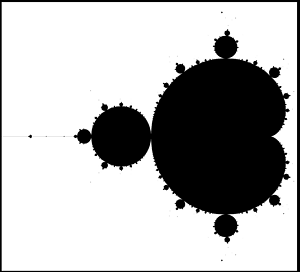
Likewise, when life swings too far past the "inner edge of chaos", the system loses its ability to self organize. This can be observed in cases of cancer where a subsystem of cells within the complete living system loses the ability to regulate expenditure of resources. In cancer, most cellular resources are allocated to reproduction instead of differentiation and functionality. The cancer cells replicate in exponential self-similar chaos fractal patterns like the common Mandelbrot geometic patterns of Merkel cell carcinomas.
Janecka suggests that many untreatable human diseases can be catagorized as pendulum swinging too far in either direction of the self-organizing/self-adapting systems. A swing in either direction plunges the living system into a stage of accelerating entropy ontil the system completely unravels at death. He goes on to suggest that scientists and clinicians could use the model to evaluate what needs to happen to a diseased patient to best bring them back to their healthy balance of order and chaos. In the case of cancer, Janecka proposes that efforts be made to re-educate the cancer cells to move back toward efficient energy consumption. Teach the cancer cells to differentiate again instead of reproduce. Re-balance the system.
The concept is fascinating and I look forward to following up on researcher who reference this publication.

----------------------------
The second publication I spent a lot of time attempting to wrap my feeble mind around this past weekend was a fascinating conceptual "modeling" paper written by Dr. Ivo Janecka, MD, MBA, PhD (that's a lot of letters...). As I mentioned in my post about Miuro, I am very much intrigued by chaos mathematics and non-linear dynamics. It is the most ambitious of my many amateur interests.
The introduction of Janecka's publication starts with a quote by Fritjof Capra saying:
"The more we study the major problems of our time, the more we come to realize that they cannot be understood in isolation. They are systemic problems, which means they are interconnected and interdependent."It is a sentiment which many scientists share, but is very easy to lose site of when we attempt to make our research efforts more manageable. We try to linearize our experiments. We pretend that we can study individual variables. We forget that we are usually attempting to solve complex problems rather than answer simple binary questions. In the twenty-first century, living systems and their "problems" are proving to be more complex than any systems humans have ever tried to understand.
When I decided to pursue a career in life sciences, it was because I could not imagine that any other field of study could offer systems as beautiful and mysterious as life. I also could not imagine a field that could offer so much promise to help fellow humans once some of the mysteries were unlocked.
In this publication, Janecka offers a conceptual model for life systems. He describes life as a "non-linear dynamical system following the principles of organized complexity" with a "health territory" defined by the the systems ability to self-organize and self-adapt.
OK, so what does that mean? Let's take it one part at a time.
What is a non-linear dynamical system?
This is a system where small changes to early conditions can directly result in hugely different results at some later time. Many people have heard of the concept of a butterfly fluttering its wings on the North American west coast resulting in dramatic changes to huge tropical weather system on the east coast. Weather patterns are good examples of non-linear dynamical systems.
What is self-organization?
A system that self-organizes is one that will find a way to go back to "normal" after it has been disrupted. Imagine a beehive that is completely buzzing with activity. Now, imagine throwing a very small pebble at that beehive and disrupting the activity of the bees. For a few moments, the bees buzz away and circle the hive, only to go right back to the hive. The hive then appears almost exactly as it had before it had been disrupted. The system always approaches an organized baseline of activity.
Life, specifically human life, is very much the same. Our bodies work to self-organize. When we suffer lacerations, bleeding stops and the lesion closes/heals. This propensity to self-organize is catagorized by Janecka into a "zone of order".
What is self-adaptation?
Self-adaptation can be described as a systems flexibility to change based on information received from outside to the system. If you have ever attempted to play the guitar, you will know that it hurts at first. Fingertips become raw. Forearms become very sore. Over time, the muscles in the hand and forearm become much stronger and the fingertips become calloused and less sensitive to pain. The system is self-adapting to the information conveyed from the environment. If we could not adapt the environment around us and we didn't have flexibility to express a variety of phenotypes, our species could not survive. This flexibility is catagorized by Janecka within the "inner edge of chaos".
If life is a self-organizing and self-adapting system, then, Janecka reasons, it can be described as a pendulum swinging back and forth through the "zone of order" and the "inner edge of chaos".
When life swings too far into the "zone of order", it is at the expense of adaptability. This can result in detrimental rigidity as in the case of ECG cardiac signalling. Lack of chaotic fluctuations in cardiac electical signalling invariably indicates cardiac disease because of its lack of adaptability to variable conditions of stress and strain. Imagine if your heart couldn't beat faster when you needed to run. You wouldn't be able to get oxygen to your blood and muscles fast enough. It would be detrimental to you as a "living system".
Likewise, when life swings too far past the "inner edge of chaos", the system loses its ability to self organize. This can be observed in cases of cancer where a subsystem of cells within the complete living system loses the ability to regulate expenditure of resources. In cancer, most cellular resources are allocated to reproduction instead of differentiation and functionality. The cancer cells replicate in exponential self-similar chaos fractal patterns like the common Mandelbrot geometic patterns of Merkel cell carcinomas.
Janecka suggests that many untreatable human diseases can be catagorized as pendulum swinging too far in either direction of the self-organizing/self-adapting systems. A swing in either direction plunges the living system into a stage of accelerating entropy ontil the system completely unravels at death. He goes on to suggest that scientists and clinicians could use the model to evaluate what needs to happen to a diseased patient to best bring them back to their healthy balance of order and chaos. In the case of cancer, Janecka proposes that efforts be made to re-educate the cancer cells to move back toward efficient energy consumption. Teach the cancer cells to differentiate again instead of reproduce. Re-balance the system.
The concept is fascinating and I look forward to following up on researcher who reference this publication.
Tuesday, July 3, 2007
Scientists Stressed About Weight Loss
Do researchers really think neuropeptide Y can sculpt the perfect body?
Every few years, researchers challenge Jenny Craig's and the late Dr. Atkins' stranglehold on the weight loss industry. (Honestly, I don't know what they are thinking. I wouldn't take Kirstie Alley on.)
I remember back around 2001 when a biotech company, Regeneron, was developing a drug trademarked as Axokine (it was actually ciliary neurotrophic factor, or CNTF) in hopes of manipulating the leptin "hunger" pathway. At the time, it was suggested that both leptin and Axokine worked in large part by inhibiting the activity of neuropeptide Y in neurons. Neuropeptide Y (NPY) was reputed to increase appetite in small animals when small doses were delivered directly to their brains. Additionally, when NPY receptor positive neurons are selectively destroyed, experimental animals eat much less. Regeneron generated data that showed that CNTF, like leptin, suppressed activity of NPY receptor positive neurons in the hypothalamus. Unfortunately for Regeneron and its stockholders in March of 2003, Phase III clinical trial results for Axokine indicated that the weight loss in the treatment group was a marginal 6.2 lbs loss. Additionally, a subset of Axokine treated patients developed antibodies to the drug which neutralized its effects. While leptin and NPY were still obvious players in appetite and weight gain/loss, it had become clear that manipulating the pathway would not be a trivial effort.
Now 4 years later, leptin and NPY are back in the news because of work published in Nature Medicine by researchers at Georgetown University Medical Center. As usual, the media has produced article titles like "Scientists Find Way to Block Weight Gain in Stressed People". (I often hate the news media, particularly FOXNews). These titles imply that overworked fat people will be able to take a pill that makes them lose weight within the next year. While there are a couple of clinical trials tied to the freshly reported research, we're going to have to wait for a little while before knowing how it will all play out. Not all of the current reports are promising. Well, let me put it this way, the research that is currently making news is right about where Regeneron was with Axokine circa 2000; and we all know how far that got.
With silly media coverage aside, the research conclusions by scientists at Georgetown University Medical Center are very interesting. It seems that NPY does not only work via appetite mediation in the brain signaling pathway. Rather, their data in mice suggest that when animals become stressed by aggression or temperature changes, their sympathetic nerves generate more NPY and NPY receptors in abdominal fat. This upregulation is concurrent with increased growth of new fat cells and in fat tissue angiogenesis . Fat tissue, just like any other tissue, needs blood supply to grow and sustain itself. The researchers backed up their conclusions further by suppressing the abdominal fat growth in stressed animals using a NPY blocker injected directly into the abdominal fat of stressed animals.
Aside from having discovered a potential way of reducing fat in the abdomen, there are other implications to this research:
1. Could anti-anxiety medications reduce this stress signaling pathway that causes weight gain?
2. Could NPY be injected to increase fat where desired? More natural looking breast implants?
3. Can increasing peripheral (outside of the brain) levels of NPY increase appetite while decreasing weight?
Major questions still remain, however. First and foremost, do human really work the same way as rodents in this case. Secondly, would this be a safe therapeutics. And, thirdly, most obviously to me, why do most of the stressed out people who I know appear emaciated. Personally, I lose weight when I get stressed. My guess is that, as usual, the physiology and molecular biology of this is far more nuanced than the current story allows. Time will tell.
Every few years, researchers challenge Jenny Craig's and the late Dr. Atkins' stranglehold on the weight loss industry. (Honestly, I don't know what they are thinking. I wouldn't take Kirstie Alley on.)
I remember back around 2001 when a biotech company, Regeneron, was developing a drug trademarked as Axokine (it was actually ciliary neurotrophic factor, or CNTF) in hopes of manipulating the leptin "hunger" pathway. At the time, it was suggested that both leptin and Axokine worked in large part by inhibiting the activity of neuropeptide Y in neurons. Neuropeptide Y (NPY) was reputed to increase appetite in small animals when small doses were delivered directly to their brains. Additionally, when NPY receptor positive neurons are selectively destroyed, experimental animals eat much less. Regeneron generated data that showed that CNTF, like leptin, suppressed activity of NPY receptor positive neurons in the hypothalamus. Unfortunately for Regeneron and its stockholders in March of 2003, Phase III clinical trial results for Axokine indicated that the weight loss in the treatment group was a marginal 6.2 lbs loss. Additionally, a subset of Axokine treated patients developed antibodies to the drug which neutralized its effects. While leptin and NPY were still obvious players in appetite and weight gain/loss, it had become clear that manipulating the pathway would not be a trivial effort.
Now 4 years later, leptin and NPY are back in the news because of work published in Nature Medicine by researchers at Georgetown University Medical Center. As usual, the media has produced article titles like "Scientists Find Way to Block Weight Gain in Stressed People". (I often hate the news media, particularly FOXNews). These titles imply that overworked fat people will be able to take a pill that makes them lose weight within the next year. While there are a couple of clinical trials tied to the freshly reported research, we're going to have to wait for a little while before knowing how it will all play out. Not all of the current reports are promising. Well, let me put it this way, the research that is currently making news is right about where Regeneron was with Axokine circa 2000; and we all know how far that got.
With silly media coverage aside, the research conclusions by scientists at Georgetown University Medical Center are very interesting. It seems that NPY does not only work via appetite mediation in the brain signaling pathway. Rather, their data in mice suggest that when animals become stressed by aggression or temperature changes, their sympathetic nerves generate more NPY and NPY receptors in abdominal fat. This upregulation is concurrent with increased growth of new fat cells and in fat tissue angiogenesis . Fat tissue, just like any other tissue, needs blood supply to grow and sustain itself. The researchers backed up their conclusions further by suppressing the abdominal fat growth in stressed animals using a NPY blocker injected directly into the abdominal fat of stressed animals.
Aside from having discovered a potential way of reducing fat in the abdomen, there are other implications to this research:
1. Could anti-anxiety medications reduce this stress signaling pathway that causes weight gain?
2. Could NPY be injected to increase fat where desired? More natural looking breast implants?
3. Can increasing peripheral (outside of the brain) levels of NPY increase appetite while decreasing weight?
Major questions still remain, however. First and foremost, do human really work the same way as rodents in this case. Secondly, would this be a safe therapeutics. And, thirdly, most obviously to me, why do most of the stressed out people who I know appear emaciated. Personally, I lose weight when I get stressed. My guess is that, as usual, the physiology and molecular biology of this is far more nuanced than the current story allows. Time will tell.
Monday, June 25, 2007
Speaking of AAV, Parkinson's Gene Therapy progress?
Considering that we've been talking about gene therapy a lot here lately, I think this news is quite relevant. Current Omnome topics aside, this news is very important.
There have been recent reports about a gene therapy strategy that resulted in symptom amelioration in Parkinson's patients. The project was spearheaded in part by Dr. Matthew During of Ohio State University. Having met Dr. During at the Society for Neuroscience conference in Orlando in 2002, I am not at all surprised that he would be part of a project that could stand at the cutting edge of clinical translational research. As a trained neurosurgeon with a PhD, this New Zealander came across as not only talented, but also as having major cojones.
So let's talk about the therapeutic that was tested by During and his colleagues. The researchers used an adeno-associated virus (AAV) to deliver a gene encoding the protein, glutamic acid decarboxylase (GAD), to the subthalamic nucleus in the brains of Parkinson's patients.
So what does that all mean? Well, let's briefly review AAV. AAV are small viruses that do not induce an immune response in humans. Additionally, they deliver DNA genetic material which directly incorporates into the cellular genome. It gets copied when transduced cells divide into daughter cells. Now we'll talk about Parkinson's Disease. Parkinson's is a complicated disease which results in neuronal death, neurodegeneration. Specific parts of the brain are very susceptible to this neurodegeneration. The substantia nigra of the brain is one of those parts. As a result the neurotransmitter balance is thrown off to the point where the substantia nigra is too "excited". The aim of a GAD gene therapy is to turn part of the substantia nigra from a primarily excitatory nucleus to a primarily inhibitory system.
Whether or not the gene therapy is working the way the researchers think it does is always up for debate. What isn't as debatable is the fact that most of the patients who received the injection of GAD encoding virus had symptomatic improvements. Since this was mainly a dose ranging and safety Phase I/II clinical trial, the number of patients was not high enough to power a statistically significant symptom amelioration metric. However, all signs point toward some hope for improved quality of life for Parkinson's patients. What this also provides is another glimmer of hope that gene therapy strategies might be in the clinic sooner than later. What this certainly is NOT is a cure. Patients need to remember that the neurons are still dying. Neurodegeneration is an extremely tough nut to crack (trust me on this one...I'm in neurodegeneration research for the long haul). Maybe one day we'll come up with a gene therapy that can protect the neurons...
There have been recent reports about a gene therapy strategy that resulted in symptom amelioration in Parkinson's patients. The project was spearheaded in part by Dr. Matthew During of Ohio State University. Having met Dr. During at the Society for Neuroscience conference in Orlando in 2002, I am not at all surprised that he would be part of a project that could stand at the cutting edge of clinical translational research. As a trained neurosurgeon with a PhD, this New Zealander came across as not only talented, but also as having major cojones.
So let's talk about the therapeutic that was tested by During and his colleagues. The researchers used an adeno-associated virus (AAV) to deliver a gene encoding the protein, glutamic acid decarboxylase (GAD), to the subthalamic nucleus in the brains of Parkinson's patients.
So what does that all mean? Well, let's briefly review AAV. AAV are small viruses that do not induce an immune response in humans. Additionally, they deliver DNA genetic material which directly incorporates into the cellular genome. It gets copied when transduced cells divide into daughter cells. Now we'll talk about Parkinson's Disease. Parkinson's is a complicated disease which results in neuronal death, neurodegeneration. Specific parts of the brain are very susceptible to this neurodegeneration. The substantia nigra of the brain is one of those parts. As a result the neurotransmitter balance is thrown off to the point where the substantia nigra is too "excited". The aim of a GAD gene therapy is to turn part of the substantia nigra from a primarily excitatory nucleus to a primarily inhibitory system.
Whether or not the gene therapy is working the way the researchers think it does is always up for debate. What isn't as debatable is the fact that most of the patients who received the injection of GAD encoding virus had symptomatic improvements. Since this was mainly a dose ranging and safety Phase I/II clinical trial, the number of patients was not high enough to power a statistically significant symptom amelioration metric. However, all signs point toward some hope for improved quality of life for Parkinson's patients. What this also provides is another glimmer of hope that gene therapy strategies might be in the clinic sooner than later. What this certainly is NOT is a cure. Patients need to remember that the neurons are still dying. Neurodegeneration is an extremely tough nut to crack (trust me on this one...I'm in neurodegeneration research for the long haul). Maybe one day we'll come up with a gene therapy that can protect the neurons...
State of the Art: GENE THERAPY- Pt2

See part 1
Viral Delivery
Most gene therapy strategies in research and clinical labs up until now have revolved around harnessing the evolved capabilities of viruses to deliver their viral genomes into cells. This is commonly known as use of a viral vector.
Let’s talk a little bit about viruses. Viruses are particles which can infect cells of living organisms. Viruses are made up of a protein shell encasing viral genetic material. In order to reproduce, viruses attach via their protein shells to cell surface membranes where they inject their genetic material. For normal disease causing viruses, the viral genetic material hijacks the cell’s protein and nucleotide generating machinery to produce more complete virus particles. The cycle continues until the immune system can seek and destroy the viral particles (unless the immune system is the target of the virus; as in the case of HIV). The process by which viruses deliver their viral genomes into cells is referred to as viral transduction.
In order to use a virus as a delivery vector, the viral genetic material basically needs to be removed and replaced with genetic material encoding the desired cellular product.
Retroviruses
There are a few different kinds of viruses which can be used for gene transduction. Retroviruses are one kind. Retroviruses store their genetic material in the form of RNA. When a retrovirus infects or transduces a cell, it introduces ins RNA and a few additional enzymes to the cell. The RNA is then copied to DNA inside the cell my an enzyme called reverse transcriptase. The new DNA is then inserted into the cell’s own genome by the integrase enzyme. The viral DNA is now a part of the host cell’s DNA. If the host cell divides, then any daughter cells will share the new DNA. The great thing about that from a gene therapy standpoint is the fact that there would be little or no need to introduce the therapeutic gene more than once. The downsides to it, however, are that:
1) The viral DNA can be incorporated into portions of the cell genome that result in faulty transcription of important genes. This could lead to cancer conditions caused by the gene therapy in the same way that human papillomavirus (HPV) predosiposes women for cervical cancer.
2) If the virus inserts itself into the wrong cell type, the genetic material could be passed on indefinitely within unintended cells for unintended results.
Adenoviruses
Adenoviruses are very different from retroviruses in that the genomic material which adenoviruses use to hijack a cell starts as DNA. Additionally, the DNA does not incorporate itself in the host cell’s genome. The viral DNA finds its way into the host cell’s nucleus where it is transcribed to RNA in the same way all nuclear DNA is transcribed. However, since the viral genes are not incorporated into the cell’s genome, the gene will not be duplicated and passed on to daughter cells after cell division. In one sense, this is advantageous from a gene therapists standpoint. It means that the gene product will only be produced as long as the transduced cells are alive. Long term side effects are minimal. The downside of this approach, however, is the fact that the virus would likely need to be administered more than once.
Adeno-Associated Viruses
The major downside to AAV is the fact that the viral particles are very small and cannot hold very much genetic material. They would be limited in what gene products they could code for.
So now you know the three types of viruses used for gene therapies. You also know their basic advantages and disadvantages. The next installment in this series will talk about non viral gene delivery techniques. After that, we will summarize the potentially therapeutic gene products being tested in contemporary research labs. We hope you are enjoying the content so far.
Thursday, June 14, 2007
What did ENCODE decode?

As recently as five days ago, I penned a post about what the Human Genome Project (HGP) had and had not accomplished. I wish I could say that I had written that with the full knowledge that it would be a great primer for a piece about the genome discoveries released today by ENCODE , the NIH follow-up effort to the HGP. I would be lying if I did.
Anyways, front and center at Nature.com is a pdf of the publication by the Encode Consortium outlining the highlights of their efforts to pass a fine toothed comb through approximately 1% of the human genome.
The publication is fascinating in both its breadth and detail. Before I expound on its virtues, let me first comment on my only suspicion about the project. From my own somewhat limited experience in biomedical research, I am not a big fan of large consortium efforts. While I love the concept of open source sharing of data and collaboration, I have usually found that huge efforts across many labs breed data inconsistencies as a result of methodological and analytical differences. Differences in variables as small as humidity in the lab can yield differences in datasets that can obscure the real story. All of that said, it would be very hard to argue with the key points that are coming out of this publication, because the key points make a lot more sense than the conventional wisdom that has been coming out of college biology text books for years (at least when I was in college).
Most of us have been taught at some point that DNA leads to RNA which leads to protein. Well, all of that is still true, but as time goes on, we continue to discover that there are more and more options for the RNA besides producing protein. Without further ado, here are the take home notes on the ENCODE project:
- While it was once thought that a large proportion of DNA was "junk" which did nothing, it is becoming clearer that the vast marority of DNA does transcribe RNA. Many new non-protein coding RNA's have been discovered in the ENCODE effort.
- Chromatin accessibility, basically how tightly the DNA is wound, has a huge effect on how readily it is transcribed to RNA. In turn, many RNA's can affect how tightly the DNA is wound.
- We have evolved in a way that has rendered about 5% of our DNA inactive.
- Some regions of our DNA are wildly variable from person to person, while other regions barely change (this isn't really news, but they've been able to pinpoint some of the specific variable regions).
- RNA can do many things beside encode for protein. Some RNA's are used by the cell to suppress other RNA's...thereby regulating the genome. (this isn't really news either).
- There is way too much RNA in cells for us to know what all of it does at this point in time
Wednesday, June 13, 2007
AVIAN FLU- Will it ever take off?

A while back, there was a huge media scare about the avian flu. Media fear mongering alternately amuses and irritates me. The media often fills news gaps with whatever they can come up with that might terrify the populace and incite us to improve their ratings and sales. Perhaps one day we can write an article about the psychology behind scare tactics in media programming. Today, however, I am going to talk about the avian flu and the flu in general.
How much do each of us really know about the flu? Before I started my formal medical education, I could barely tell the difference between having the flu and having a bad cold myself. They are both viruses. Both result in the symptoms which can include sore throats, coughing, achiness, and headaches.
So what are the differences? Well, first of all, cold’s are caused by rhinoviruses. As the name implies, rhinoviruses cause symptoms in the nose. That snotty, nasal congestive hell that we all go through at least once yearly can be blamed on the common cold. Generally speaking, the common cold stays in the upper respiratory tract. The flu, or influenza as it is more formally known, is caused by the orthomyxoviridae family of viruses. While some of its symptoms are shared with the common cold, it is noted for knocking us completely out of commission for a day or two. All we can do is just lay in bed and whine to our significant others. In the worst cases, the flu can cause pneumonia. For those of you who have never experienced this fun condition, it’s a lot like drowning in your own mucous. It can be fatal, especially in very young or very old patients. Not fun.
That’s right, most flu viruses that infect humans are originally avian viruses. Then why the big deal about this new avian flu? Well, it seems that this particular strain, the H5N1 strain, of avian flu is quite deadly when contracted by humans. Fortunately for our species thus far, though we can contract the virus directly from birds, we cannot pass the virus on to other humans.
As CNN, FoxNews, and Katie Couric have all informed us many times, many leading epidemiologists believe that it will only be a matter of time before the H5N1 strain mutates into a form by which humans can infect each other directly. Mass hysteria will follow. Everyone will dress up in football pads and have Mohawks like they did in the post apocalyptic world of Mad Max. It’ll be great. Really.
Just kidding. We won’t be wearing football pads.
Then stay as far away from public transportation and airports as you can possibly get.
Subscribe to:
Posts (Atom)