Showing posts with label Genomics. Show all posts

Sunday, July 8, 2007

Cancer: A Mistep into Chaos Quicksand?

I spent much of this weekend pouring over two publications. The first, Probing Genetic Overlap Among Complex Human Phenotypes, was published in PNAS. Gene Expression has a nice post about the publication. While the paper itself focuses on genetic overlap between Autism, Schizophrenia, and Bi-polar Disorder, the scope of the work spans across over 150 diseases which were all compared in a pair-wise fashion. My personal interests in this work lie in their findings regarding Amytrophic Lateral Sclerosis which the authors included in their 200+ pages of supplementary materials. As I learn more about this work, I will share more about my understanding of the potential significance.


----------------------------

The second publication I spent a lot of time attempting to wrap my feeble mind around this past weekend was a fascinating conceptual "modeling" paper written by Dr. Ivo Janecka, MD, MBA, PhD (that's a lot of letters...). As I mentioned in my post about Miuro, I am very much intrigued by chaos mathematics and non-linear dynamics. It is the most ambitious of my many amateur interests.

The introduction of Janecka's publication starts with a quote by Fritjof Capra saying:

"The more we study the major problems of our time, the more we come to realize that they cannot be understood in isolation. They are systemic problems, which means they are interconnected and interdependent."
It is a sentiment which many scientists share, but is very easy to lose site of when we attempt to make our research efforts more manageable. We try to linearize our experiments. We pretend that we can study individual variables. We forget that we are usually attempting to solve complex problems rather than answer simple binary questions. In the twenty-first century, living systems and their "problems" are proving to be more complex than any systems humans have ever tried to understand.

When I decided to pursue a career in life sciences, it was because I could not imagine that any other field of study could offer systems as beautiful and mysterious as life. I also could not imagine a field that could offer so much promise to help fellow humans once some of the mysteries were unlocked.

In this publication, Janecka offers a conceptual model for life systems. He describes life as a "non-linear dynamical system following the principles of organized complexity" with a "health territory" defined by the the systems ability to self-organize and self-adapt.

OK, so what does that mean? Let's take it one part at a time.


What is a non-linear dynamical system?

This is a system where small changes to early conditions can directly result in hugely different results at some later time. Many people have heard of the concept of a butterfly fluttering its wings on the North American west coast resulting in dramatic changes to huge tropical weather system on the east coast. Weather patterns are good examples of non-linear dynamical systems.


What is self-organization?

A system that self-organizes is one that will find a way to go back to "normal" after it has been disrupted. Imagine a beehive that is completely buzzing with activity. Now, imagine throwing a very small pebble at that beehive and disrupting the activity of the bees. For a few moments, the bees buzz away and circle the hive, only to go right back to the hive. The hive then appears almost exactly as it had before it had been disrupted. The system always approaches an organized baseline of activity.

Life, specifically human life, is very much the same. Our bodies work to self-organize. When we suffer lacerations, bleeding stops and the lesion closes/heals. This propensity to self-organize is catagorized by Janecka into a "zone of order".


What is self-adaptation?

Self-adaptation can be described as a systems flexibility to change based on information received from outside to the system. If you have ever attempted to play the guitar, you will know that it hurts at first. Fingertips become raw. Forearms become very sore. Over time, the muscles in the hand and forearm become much stronger and the fingertips become calloused and less sensitive to pain. The system is self-adapting to the information conveyed from the environment. If we could not adapt the environment around us and we didn't have flexibility to express a variety of phenotypes, our species could not survive. This flexibility is catagorized by Janecka within the "inner edge of chaos".

If life is a self-organizing and self-adapting system, then, Janecka reasons, it can be described as a pendulum swinging back and forth through the "zone of order" and the "inner edge of chaos".

When life swings too far into the "zone of order", it is at the expense of adaptability. This can result in detrimental rigidity as in the case of ECG cardiac signalling. Lack of chaotic fluctuations in cardiac electical signalling invariably indicates cardiac disease because of its lack of adaptability to variable conditions of stress and strain. Imagine if your heart couldn't beat faster when you needed to run. You wouldn't be able to get oxygen to your blood and muscles fast enough. It would be detrimental to you as a "living system".

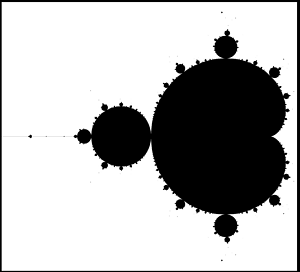
Likewise, when life swings too far past the "inner edge of chaos", the system loses its ability to self organize. This can be observed in cases of cancer where a subsystem of cells within the complete living system loses the ability to regulate expenditure of resources. In cancer, most cellular resources are allocated to reproduction instead of differentiation and functionality. The cancer cells replicate in exponential self-similar chaos fractal patterns like the common Mandelbrot geometic patterns of Merkel cell carcinomas.

Janecka suggests that many untreatable human diseases can be catagorized as pendulum swinging too far in either direction of the self-organizing/self-adapting systems. A swing in either direction plunges the living system into a stage of accelerating entropy ontil the system completely unravels at death. He goes on to suggest that scientists and clinicians could use the model to evaluate what needs to happen to a diseased patient to best bring them back to their healthy balance of order and chaos. In the case of cancer, Janecka proposes that efforts be made to re-educate the cancer cells to move back toward efficient energy consumption. Teach the cancer cells to differentiate again instead of reproduce. Re-balance the system.

The concept is fascinating and I look forward to following up on researcher who reference this publication.



Saturday, June 30, 2007

Gene Swap Meet

Sorry it has been so long since our last post.

This has been a very crazy week for me that I can most aptly describe with a quote from Dr. Peter Venkman in Ghostbusters when he described "...human sacrifice, dogs and cats living together - mass hysteria!"

Anyways, I am glad the week is over. We hope to get back to more regular posting again.

While I am admittedly tired of talking about genetics here, I am going to address the subject at least 3 more times in the near future. We have two more posts to go in our State of the Art series and we have the post that I am about to write.

Currently in the news, we are hearing about steps closer to "artificial life". The idea of artificial life is an odd one to me since life can largely be catagorized as a binary state, alive or not alive. It seems difficult to me to be artificially alive. Oh, I know many of you will want to nitpick about grey areas like viruses and such, but that's a completely different question. My bottom line is that life is real or not alive. There will never be artificial life. Ah, the wonders of semantics.

So what am I talking about here? What is the big news? Researchers at the J. Craig Venter Institute in Maryland have published a paper in Science explaining how they transfered an entire genome from one species of bacteria (Mycoplasma mycoides) into a population of a completely different species of bacteria (Mycoplasma capricolum). On the surface, this might seem unremarkable since Dolly the sheep was cloned back in 1996 by transferring the entire genetic code of one sheep into a sheep egg cell. However, up until now, no cells of one species have been made to "engraft" an entirely transplanted genome of another species.

While the idea that this will lead to "artificial life" is somewhat absurd since the concept doesn't really exist, this is exciting because it could be a first step toward creating novel organisms specifically designed for a human need. Imagine a bacteria that could be designed to metabolize sugar and produce propane for fuel. While I am not sure that is an attainable endeavor, Venter seems to think it is. I imagine, to him, this publication is one more step in the right direction. Not sure it is the right direction, but it is definately a step toward his goals.

Monday, June 25, 2007

State of the Art: GENE THERAPY- Pt2


See part 1

Viral Delivery

Most gene therapy strategies in research and clinical labs up until now have revolved around harnessing the evolved capabilities of viruses to deliver their viral genomes into cells. This is commonly known as use of a viral vector.

Let’s talk a little bit about viruses. Viruses are particles which can infect cells of living organisms. Viruses are made up of a protein shell encasing viral genetic material. In order to reproduce, viruses attach via their protein shells to cell surface membranes where they inject their genetic material. For normal disease causing viruses, the viral genetic material hijacks the cell’s protein and nucleotide generating machinery to produce more complete virus particles. The cycle continues until the immune system can seek and destroy the viral particles (unless the immune system is the target of the virus; as in the case of HIV). The process by which viruses deliver their viral genomes into cells is referred to as viral transduction.

In order to use a virus as a delivery vector, the viral genetic material basically needs to be removed and replaced with genetic material encoding the desired cellular product.


Retroviruses

There are a few different kinds of viruses which can be used for gene transduction. Retroviruses are one kind. Retroviruses store their genetic material in the form of RNA. When a retrovirus infects or transduces a cell, it introduces ins RNA and a few additional enzymes to the cell. The RNA is then copied to DNA inside the cell my an enzyme called reverse transcriptase. The new DNA is then inserted into the cell’s own genome by the integrase enzyme. The viral DNA is now a part of the host cell’s DNA. If the host cell divides, then any daughter cells will share the new DNA. The great thing about that from a gene therapy standpoint is the fact that there would be little or no need to introduce the therapeutic gene more than once. The downsides to it, however, are that:

1) The viral DNA can be incorporated into portions of the cell genome that result in faulty transcription of important genes. This could lead to cancer conditions caused by the gene therapy in the same way that human papillomavirus (HPV) predosiposes women for cervical cancer.

2) If the virus inserts itself into the wrong cell type, the genetic material could be passed on indefinitely within unintended cells for unintended results.


Adenoviruses

Adenoviruses are very different from retroviruses in that the genomic material which adenoviruses use to hijack a cell starts as DNA. Additionally, the DNA does not incorporate itself in the host cell’s genome. The viral DNA finds its way into the host cell’s nucleus where it is transcribed to RNA in the same way all nuclear DNA is transcribed. However, since the viral genes are not incorporated into the cell’s genome, the gene will not be duplicated and passed on to daughter cells after cell division. In one sense, this is advantageous from a gene therapists standpoint. It means that the gene product will only be produced as long as the transduced cells are alive. Long term side effects are minimal. The downside of this approach, however, is the fact that the virus would likely need to be administered more than once.


Adeno-Associated Viruses

Adeno-associated viruses (AAV) are like adenoviruses in that they carry DNA. They are like retroviruses in that the viral genomic material that they carry will be incorporated into the host cell’s genome. Daughter cells will carry the gene, but the genes will not incorporate by integrase into a random portion of the host genome. Instead, AAV always incorporates into chromosome 19. One of the biggest advantages of the AAV, however, has nothing to do with its transduction approach. AAV does not induce an immune response in humans so it can pass through the body as a vector without risk of being destroyed by T cells or macrophages. AAV will not cause fevers or inflammation when administered.

The major downside to AAV is the fact that the viral particles are very small and cannot hold very much genetic material. They would be limited in what gene products they could code for.


So now you know the three types of viruses used for gene therapies. You also know their basic advantages and disadvantages. The next installment in this series will talk about non viral gene delivery techniques. After that, we will summarize the potentially therapeutic gene products being tested in contemporary research labs. We hope you are enjoying the content so far.

Thursday, June 21, 2007

State of the Art: GENE THERAPY- Pt 1

What is Gene Therapy?

Gene therapy is the term used for a biological treatment that is designed to introduce new active genetic material to living cells in order to increase or reduce a genetic product or products. These products can include either RNA or proteins or both. For the crudest of analogies, imagine the cell is a factory. This factory has assembly lines that currently build blenders. The blenders are great, but you also want to make toasters now. You send instructions to the factory to reconfigure some of its assembly lines to make toasters for at least part of the time. That is basically what is happening in gene therapy.

The most easily related example that I can think of where this technology could be useful is in Type I diabetes mellitus, where there is a deficiency in production of the protein, insulin, which is encoded by DNA on chromosome 11 in humans. An easy illustration of how a gene therapy could work would be to say that the gene for insulin production could be introduced to cells of a Type 1 diabetes patient so that their body would then be capable of generating insulin on their own. They would no longer need to take insulin shots to control high levels of blood sugar. I will stop there and now posit the emphatic caveat that the case of Type 1 diabetes is much more complex than I just described. The lack of insulin production is not because a gene is missing, rather it is because the cells that normally produce insulin are missing. In fact, diabetes might be better treated with a stem cell therapy than a gene therapy; but I digress (a topic for another State of the Art series). The main point of this ambling monologue is that, by using gene therapy, a new gene or genes can be introduced so that a cell can generate a product that it wasn’t previously generating in order to achieve a variety of net effects.

In the United States, there are currently as many as 30 clinical trials active or enrolling to test the safety and efficacy of myriad gene therapy, or gene transfer, strategies. The trials hope to find treatments for conditions ranging from X-linked Chronic Granulomatous Disease (CGD) where patients’ neutrophils cannot make a key protein necessary for infection defense to Advanced Pancreatic Cancer where a researchers are trying to test safety and dose response of delivering a “tumor killing” gene.

While there are dozens of gene therapy clinical trials and hundreds of labs worldwide conducting research with gene therapy technologies, there is still no FDA approved gene therapy product on the market; nearly 17 years after the first human gene therapy trial was conducted on a 4 year old girl with severe combined immunodeficiency (SCID) at the U.S. National Institutes of Health in 1990.

Why are gene transfers so challenging to develop and administer? There are many pitfalls. First of all, it is simply difficult to incorporate new genes into living cells, especially in a multicellular tissue system. Secondly, once the gene is there, it doesn’t always produce an active protein (or RNA). Thirdly, if the gene does work, it is very difficult, if not impossible, to turn it off, thereby rendering overdoses and immune reactions virtually impossible to treat. Forthly, it is difficult to target genes to show up in the correct cells while not also affecting cells that don’t need the gene. Lastly, there are some questions about potential to pass on the therapeutic gene to offspring who won’t need it.

These issues are currently being addressed with variable success in research around the world. They are testing many different genes and gene deliver strategies in hopes of harnessing biology’s machinery to treat diseases. In the next installments of State of the Art: GENE THERAPY, we will talk about specifics of where the technology is right now. For now, chew on this one. Think of questions. Tell me I am an idiot. Thanks for reading. :)

Upcoming Posts!

State of the Art: GENE THERAPY- Pt2
Viral Delivery

State of the Art: GENE THERAPY- Pt3
Non-Viral Delivery

Thursday, June 14, 2007

What did ENCODE decode?


As recently as five days ago, I penned a post about what the Human Genome Project (HGP) had and had not accomplished. I wish I could say that I had written that with the full knowledge that it would be a great primer for a piece about the genome discoveries released today by ENCODE , the NIH follow-up effort to the HGP. I would be lying if I did.

Anyways, front and center at Nature.com is a pdf of the publication by the Encode Consortium outlining the highlights of their efforts to pass a fine toothed comb through approximately 1% of the human genome.

The publication is fascinating in both its breadth and detail. Before I expound on its virtues, let me first comment on my only suspicion about the project. From my own somewhat limited experience in biomedical research, I am not a big fan of large consortium efforts. While I love the concept of open source sharing of data and collaboration, I have usually found that huge efforts across many labs breed data inconsistencies as a result of methodological and analytical differences. Differences in variables as small as humidity in the lab can yield differences in datasets that can obscure the real story. All of that said, it would be very hard to argue with the key points that are coming out of this publication, because the key points make a lot more sense than the conventional wisdom that has been coming out of college biology text books for years (at least when I was in college).

Most of us have been taught at some point that DNA leads to RNA which leads to protein. Well, all of that is still true, but as time goes on, we continue to discover that there are more and more options for the RNA besides producing protein. Without further ado, here are the take home notes on the ENCODE project:

  • While it was once thought that a large proportion of DNA was "junk" which did nothing, it is becoming clearer that the vast marority of DNA does transcribe RNA. Many new non-protein coding RNA's have been discovered in the ENCODE effort.
  • Chromatin accessibility, basically how tightly the DNA is wound, has a huge effect on how readily it is transcribed to RNA. In turn, many RNA's can affect how tightly the DNA is wound.
  • We have evolved in a way that has rendered about 5% of our DNA inactive.
  • Some regions of our DNA are wildly variable from person to person, while other regions barely change (this isn't really news, but they've been able to pinpoint some of the specific variable regions).
  • RNA can do many things beside encode for protein. Some RNA's are used by the cell to suppress other RNA's...thereby regulating the genome. (this isn't really news either).
  • There is way too much RNA in cells for us to know what all of it does at this point in time
I do hope you take a look at the pdf file for the original article that I linked to up above. Science journals are tedious to read, especially if it is a new world for you, but it is worth tackling every now and then. There are usually pretty pictures.

Saturday, June 9, 2007

HUMAN GENOME PROJECT- Where is it now?

The human genome is the genome of Homo sapiens, which is composed of 24 distinct chromosomes (22 autosomal + X + Y) with a total of approximately 3 billion DNA base pairs. -Wikipedia


Let me start by acknowledging that the international public Human Genome Project (HGP) and the private Celera Genomics enterprise achieved a monumental task in sequencing the human genome in 2001. News media outlets trumpeted the accomplishment with verbal steamers and confetti, calling it, among other superlatives, “the Rosetta Stone of Life.” Press releases and magazine features foretold of new disease diagnostics, treatments, and even cures which would emerge from having “decoded” the blueprint for human life while warning about the ethical fallout that could emerge from DNA manipulation.


What They Forgot to Mention

The media outlets were mostly right. They, along with the scientists and the public relations professionals involved with the projects, told us that the sequencing of the human genome was the first step toward understanding and treating many human diseases. What they didn’t tell us was how many additional steps would still need climbing before we would reap those rewards. It seems that what the project yielded was far less “Rosetta Stone” and far more akin to the discovery of a tomb filled with unintelligible Egyptian hieroglyphs.

Many articles describing the HGP erroneously use the words “sequenced” and “decoded” interchangeably. In fact, Wikipedia describes the HGP as “a project to decode (i.e. sequence) more than three billion nucleotides contained in a haploid reference human genome and to identify all the genes presented in it.” The fact is, “decode” and “sequence” are quite different.


What Did the Human Genome Project Accomplish?

If by sequencing the human genome, the HGP and Celera didn’t actually decode it, then what exactly did they accomplish? To explain, we must first take a cursory look at the ingredients that make up the genome, deoxyribonucleic acid (DNA). DNA basically is made of chains of molecules called nucleotides. There are four different nucleotides which make up DNA. These are cytosine (C), thymine (T), adenine (A), and guanine (G). The HGP and Celera looked at the complete genome of one man and cataloged each of his 3 billion plus nucleotides. Basically, the hullabaloo in 2001 was simply the media fanfare that accompanied the inking of the correct order of a single human’s C’s, T’s, G’s, and A’s.

How will this correctly ordered catalog of letters eventually result in disease diagnostics and treatments? It will be a long and winding path along which the science community has only taken a few short steps. After having laid out the map of one man’s genome, researchers are now laying out the genomic maps of many others. In order to learn what each of the 30,000 genes does, researchers must compare the genomes of many humans, determine which nucleotides are ordered differently and how those differences in nucleotides translate into differences in how we each look, behave, grow, age, develop diseases, fight off diseases, and so forth. Objectively speaking, the cataloging of that first genome is no more valuable than any of the genomic catalogs which have followed; or will follow. The mapping of the first genome was a huge milestone, but any one of us could currently have our entire genomes mapped in the exact same way for a cost of approximately $200,000. The information obtained from your genome would have the same research value as the information gleaned from the entire multibillion dollar international effort of the HGP and Celera less than a decade ago.


Where will the Human Genome Project take us?

Research projects, like the international HapMap Project, are currently cataloging and comparing the genomes of humans across relatively tight clusters of human populations. We are learning what the predominant differences in the genetic codes of four distinct populations of African, Asian, and European ancestry. With each of the populations representing variable risk factors for specific diseases and conditions, these comparisons could provide indications of which genes can lead to diseases or protect against diseases (this effort is a minefield of unresolved ethics issues…a topic for another post).

Efforts to take advantage of the ability to map each of our genomes are further confounded by the fact that our genetic codes represent only a small portion of the complexities of our molecular biological systems. The HGP tells us that we have approximately 30,000 genes. Suppositions before the Genome project were that each single gene encodes a single protein . We are left now to wonder how humans are built of approximately 120,000 proteins. To explain this, it must be the case that some genes can be toggled to create more than one gene product. The toggling must be controlled by other genes which might also be “toggle-able”.

The manipulation of genetic circuitry required to treat diseases is almost infinitely complex and requires that major strides are made by researchers who are cataloging the structure and functions of the products of the genome; proteins. This is the study of proteomics (yet another topic for another post).

In the end, like the first moon landing in 1969, the accomplishments of the Human Genome Project represent a huge milestone for humanity. Also, like the first moon landing which only represented a tiny step out into the unfathomable depths of our galaxy, the mapping of the human genome is only a tiny step into the unfathomable complexities of biology and life itself.